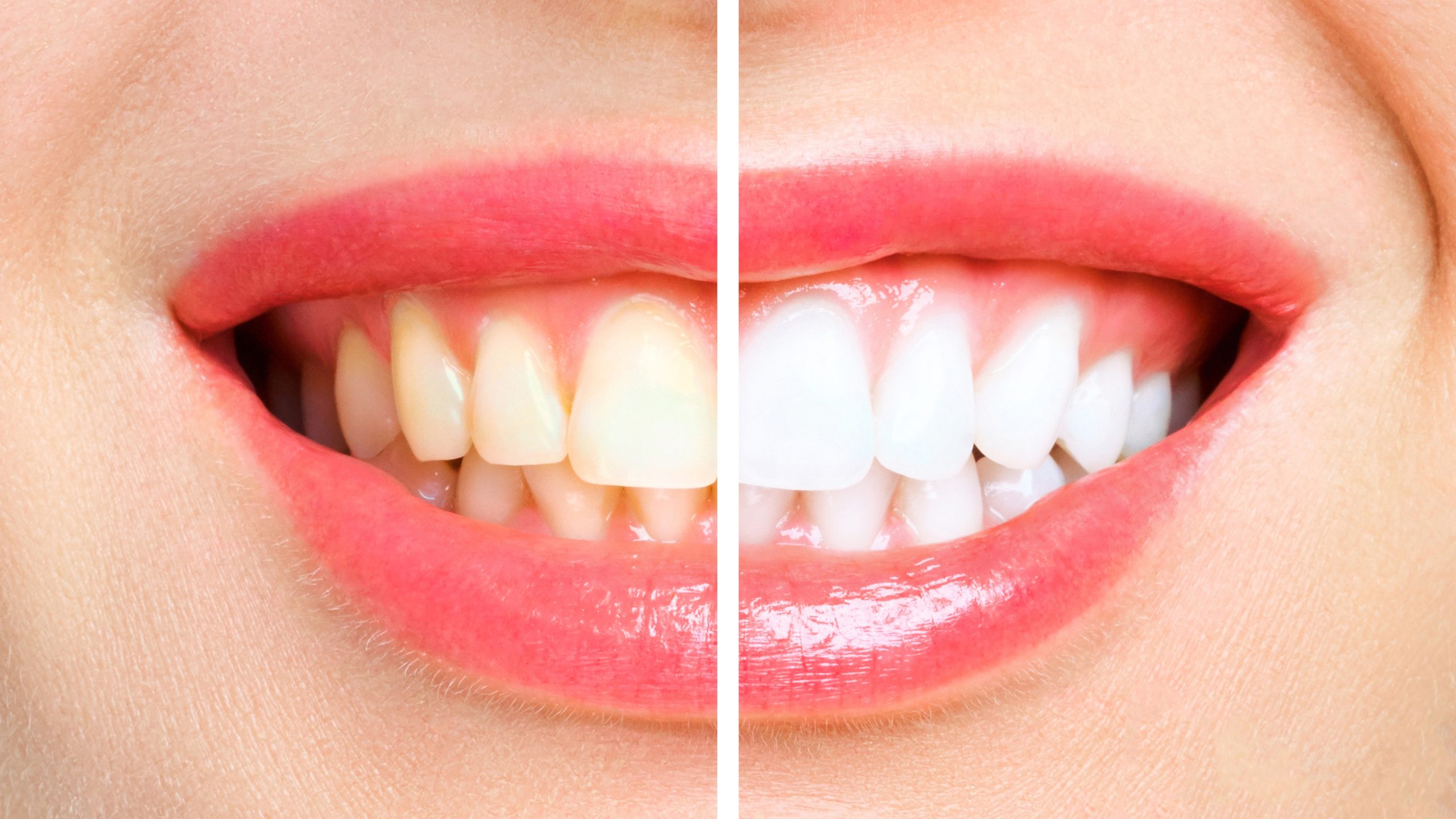
Having a better smile can increase self-assurance, but when you decide to whiten your teeth, you should have several things in mind, not just the strength of the product. Professional methods allow for teeth whitening, but the result depends on how your teeth are discoloured and the treatment chosen.
Patients interested in teeth whitening in dentistry should undergo a dental evaluation to see whether they are suitable candidates for this procedure and what option would be best for them. Professional whitening services allow for existing dental conditions to be considered.
What Is Teeth Whitening in Dentistry?
Teeth whitening is a form of cosmetic dentistry that brightens the colour of natural teeth. The various products available for teeth whitening have one or more active ingredients such as hydrogen peroxide or carbamide peroxide. These substances act by destroying the stains associated with certain types of tooth discolouration.
Hydrogen peroxide operates directly on the molecules that cause the staining, whereas carbamide peroxide splits into hydrogen peroxide and other substances. The techniques and concentration levels of professional products and those available for purchase differ.
In teeth whitening in dentistry, teeth whitening is not the same as using whitening toothpaste. While toothpaste may remove a few superficial stains by helping with cleaning, the purpose of a whitening procedure is to alter the colouration of the natural tooth structure.
Whitening, being considered a cosmetic procedure, does not serve as an alternative to regular dental hygiene exams. It does not cure any cavities, gum diseases, or specific impairment. As it is, a routine dental consultation should take place before any such procedure.
Whitening will also differ in effectiveness depending on whether the stains are superficial or deep within the tooth.
What Causes Teeth to Become Discoloured?
Teeth naturally change colour over time. Some discolouration develops gradually from everyday foods and drinks, while other changes occur within the tooth itself.
Extrinsic staining
Extrinsic stains develop on the outer surface of the teeth. Common causes include:
- Coffee
- Tea
- Red wine
- Tobacco
- Strongly coloured foods and drinks
- Plaque and accumulated surface staining
These stains may sometimes respond well to professional cleaning and whitening, depending on their severity and cause.
Intrinsic discolouration
Intrinsic discolouration occurs within the tooth. It can be associated with:
- Natural ageing
- Dental trauma
- Certain medications
- Changes within the tooth
- Previous root canal treatment
Whitening does not necessarily produce the same result for every type of discolouration. The factors of deeper or localised changes can impact less predictably and may be treated using another cosmetic or restorative treatment.
This is one of the reasons why professional dentistry teeth whitening should start with an assessment rather than treating each patient the same.
What Are the Main Teeth Whitening Options?
Several approaches are available, and each has different benefits and considerations.
In-chair professional whitening
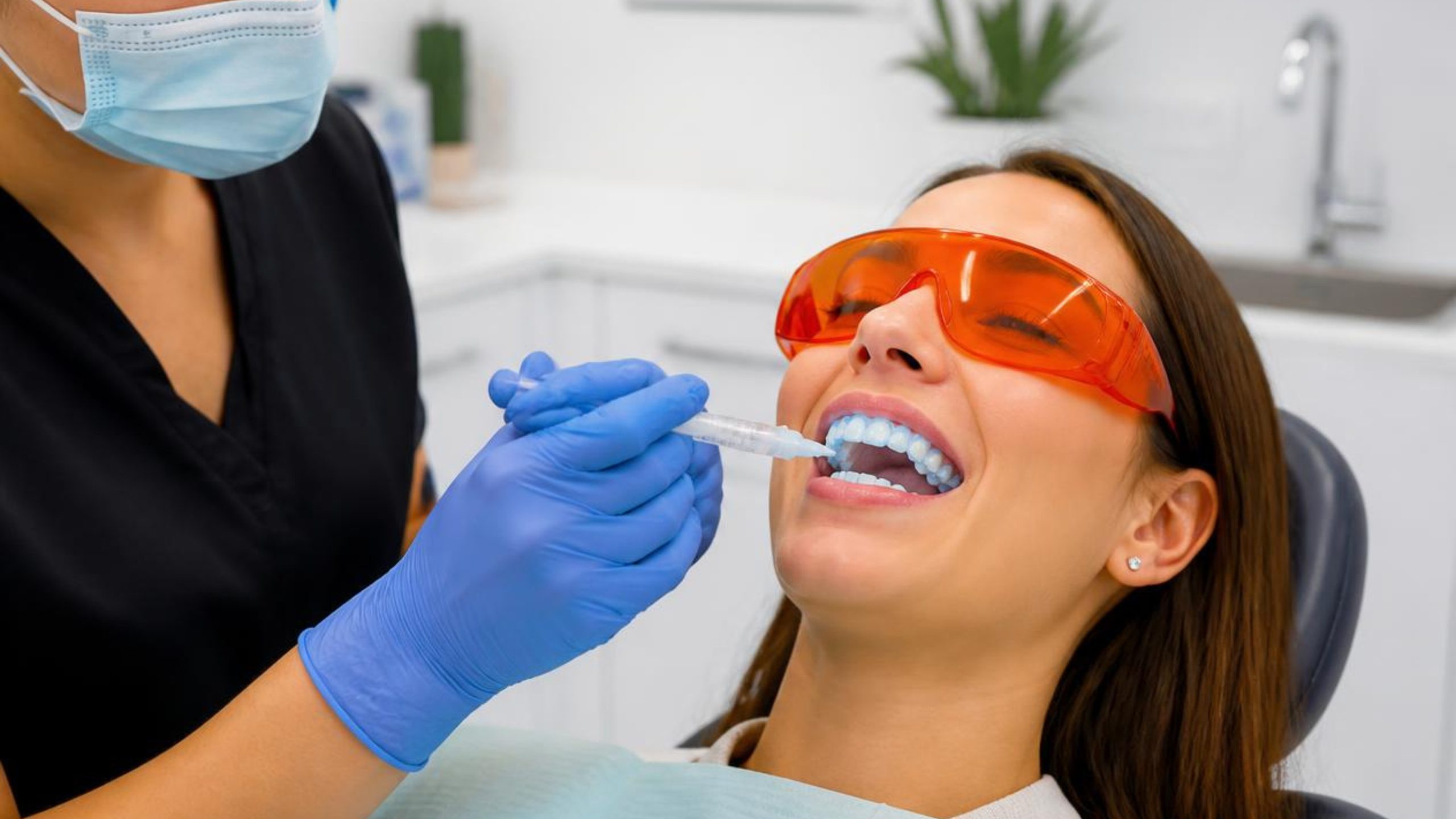
Whitening involves the oversight of an expert dentist who applies a whitening agent on your teeth while at the same time ensuring your gums and mouth parts are not affected during the procedure.
In-chair whitening offers the benefit of professional supervision in addition to effective results achieved rather quickly.
Dentist-supervised take-home whitening
A teeth whitening at-home treatment plan is provided by dental professionals in a variety of systems, which can include customised trays along with professional whitening products made available for home use according to the instructions provided.
Hence, this system can serve patients who have an inclination for slow treatment or want some level of convenience.
Over-the-counter whitening products
Whitening toothpastes, strips and other products are widely available. Their effectiveness varies according to the product and the type of staining being treated.
They may help with surface staining, but they do not provide the same level of individual assessment as professional dental treatment.
Non-dental whitening services
Whitening services may also be offered outside dental practices. Patients should consider whether a proper dental assessment is provided and whether their oral health has been checked before treatment.
The best dental whitening approach is not necessarily the strongest or most expensive option. It depends on the patient’s teeth, gums, staining, existing restorations, sensitivity and desired outcome.
How Does Professional Teeth Whitening Work?
Professional whitening generally involves several steps.
- Dental assessment
Before treatment, the dentist can assess the:
- Teeth
- Gums
- Existing crowns, veneers and fillings
- Tooth sensitivity
- Cracks or damage
- Signs of decay
- Other underlying dental problems
This assessment helps determine whether whitening is appropriate.
- Treatment planning
The right whitening technique is chosen based on the condition of the patient’s teeth and their cosmetic objectives. Some patients may benefit from in-office treatment, while other patients may prefer at-home whitening supervised by their dentist.
- Whitening application
The whitening product is carefully applied to the teeth. Professional treatment includes precautions designed to minimise contact between whitening products and the surrounding soft tissues.
- Activation
Some whitening systems use a light or other activation process as part of the treatment protocol. Where a light is used, it should not be assumed that the light alone is responsible for whitening. The whitening agent and its controlled application remain important parts of the process.
- Advice after treatment
Patients could have sensitivity of their teeth for some time following whitening. The dental team gives advice on pain management as well as restrictions concerning eating or drinking foods that might cause staining after the treatment, proper dental care and maintenance of the effects obtained.
The Family Dental Practice describes the assessment, application of the whitening and the process of taking care after treatment as parts of the professional whitening process.
Smartbleach, Zoom Whitespeed and Other Whitening Technologies
Different dental practices use different whitening systems and technologies. Zoom Whitespeed is one recognised professional whitening system, while other practices use alternative systems designed around professionally supervised whitening.
Family Dental Practice provides professional whitening using Smart Bleach® technology. The practice’s approach focuses on assessing the patient’s oral health and selecting an appropriate whitening treatment rather than relying solely on the name of a particular system.
When comparing Zoom WhitSpeed with another whitening system, patients should consider more than the technology itself. The whitening agent, treatment protocol, dental assessment, protection of the gums and individual suitability can all influence the experience and outcome.
The technology should therefore be considered as part of the overall treatment rather than as the only measure of quality.
How Much Does Dental Whitening Cost?
Different dental clinics have different prices for tooth whitening due to a variety of factors. These factors could help determine what the total cost for this service will be.
Your dentist may decide whether to provide you with cosmetic tooth whitening by assessing whether you suffer from any health-related dental problems and require treatment prior to your teeth whitening procedure.
Individuals who are evaluating costs of dental whitening should consider the specifics of the treatment rather than focus just on the numbers being advertised.
Family Dental Practice encourages you to determine which treatment is best suited for your dental issues and what it will cost during a consultation.
What Results Can You Expect From Professional Teeth Whitening?
Professional teeth whitening can make your teeth whiter, though the results will vary from one patient to another.
The outcome can be influenced by:
- The original shade of the teeth
- The type and depth of staining
- Age
- Lifestyle habits
- The whitening method used
- Existing restorations
Natural teeth generally respond to whitening, while crowns, veneers and fillings do not whiten in the same way. For patients who have dental services, this can be an important aspect.
Professional dentistry teeth whitening is thus based on reasonable expectations rather than achieving the desired tone or result.
How Long Does Teeth Whitening Last?
The process of teeth whitening is not eternal. With time, the teeth may get darker again due to coffee, tea, red wine, tobacco and so on.
Age has a direct influence on tooth colour, as well.
Proper dental treatment for teeth whitening can effectively maintain the aesthetics of a bright smile. Depending on the specific conditions of treatment, dentists may suggest dental maintenance or whitening touch-up procedures.
Is Teeth Whitening Safe?
Dental experts can do teeth whitening only after examining the dental situation thoroughly and planning treatment properly.
One common side effect is temporary sensitivity. Additionally, certain gums or other soft tissues of the mouth may be momentarily irritated after using some type of whitening products.
Professional advice and supervision become necessary, especially if a patient suffers from dental sensitivity, has dental restorations or has other oral health problems.
Teeth whitening should not be stated as absolutely safe and free from risks. In case of any acute or prolonged pain, heightened sensitivity, or gum inflammation, a patient should consult a dentist.
Who Should Avoid or Delay Teeth Whitening?
Whitening may need to be delayed or may not be suitable when certain dental problems are present.
These can include:
- Untreated tooth decay
- Active gum disease
- Cracked or damaged teeth
- Significant tooth sensitivity
- Certain types of intrinsic discolouration
- Dental restorations that would not respond to whitening
A dentist can assess these factors and explain whether whitening is appropriate. Addressing an underlying dental problem first can be more important than proceeding directly with a cosmetic treatment.

Professional Whitening vs DIY Whitening
Professional whitening and DIY products differ mainly in the level of dental assessment, treatment planning and supervision involved.
Professional treatment allows the dentist to consider the condition of the teeth and gums before whitening. Treatment can also be selected according to the patient’s staining and desired result.
Over-the-counter products may be convenient and can help with some surface staining, but results can vary, and suitability is generally not assessed by a dentist beforehand.
For patients considering teeth whitening dental care, professional assessment can provide greater confidence that the chosen treatment is appropriate for their individual circumstances.
How to Choose the Best Dental Whitening Treatment
Choosing the best dental whitening treatment starts with understanding why the teeth are discoloured.
Patients should consider:
- The cause and type of staining
- The condition of the teeth and gums
- Existing crowns, veneers or fillings
- Any history of sensitivity
- The desired degree of whitening
- Whether fast or gradual results are preferred
- Ongoing maintenance requirements
- The dentist’s professional recommendation
A stronger whitening product is not automatically the best choice. Appropriate treatment should be based on individual dental needs.
How to Maintain Your Whitening Results
Good oral hygiene is important after whitening.
Patients should:
- Brush their teeth twice a day with fluoride toothpaste
- Clean between the teeth regularly
- Attend routine dental examinations
- Follow their dentist’s whitening aftercare instructions
- Limit frequent exposure to staining foods and drinks
- Avoid smoking
- Discuss maintenance whitening with their dentist when appropriate
Regular professional cleaning can also help manage surface plaque and staining as part of ongoing teeth whitening dental care.